About
Ayurveda & Journaling

“Ayurveda sits at the heart of everything I do.”
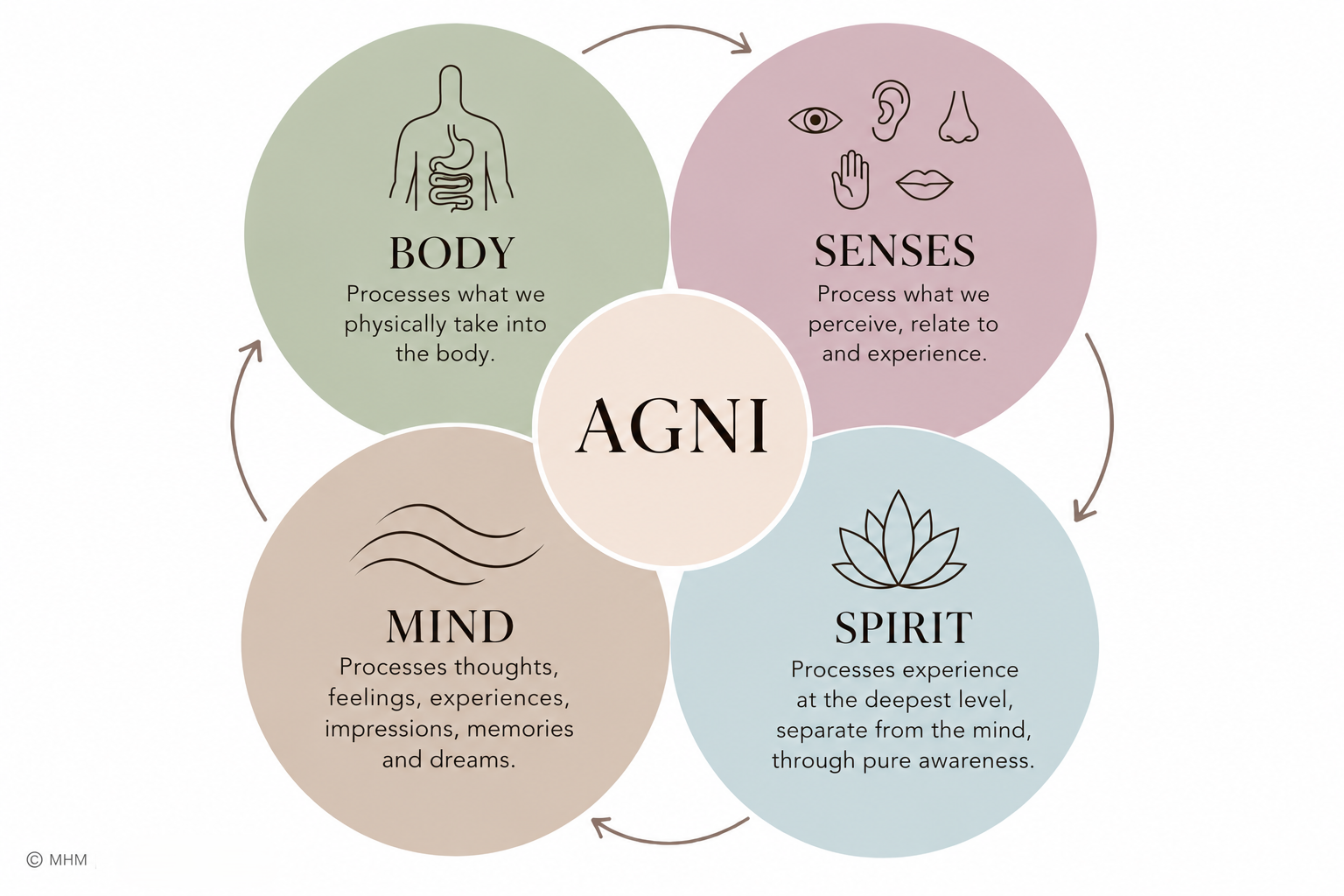
Ayurveda is an astonishing Science of Life all about the body, senses, mind and spirit.
The purpose of Ayurveda is health and happiness.
For optimal health and happiness, Ayurveda places emphasis on our ability to completely process what we take in, including letting go of what we don't need.
At the heart of this process is Agni traditionally compared to fire.
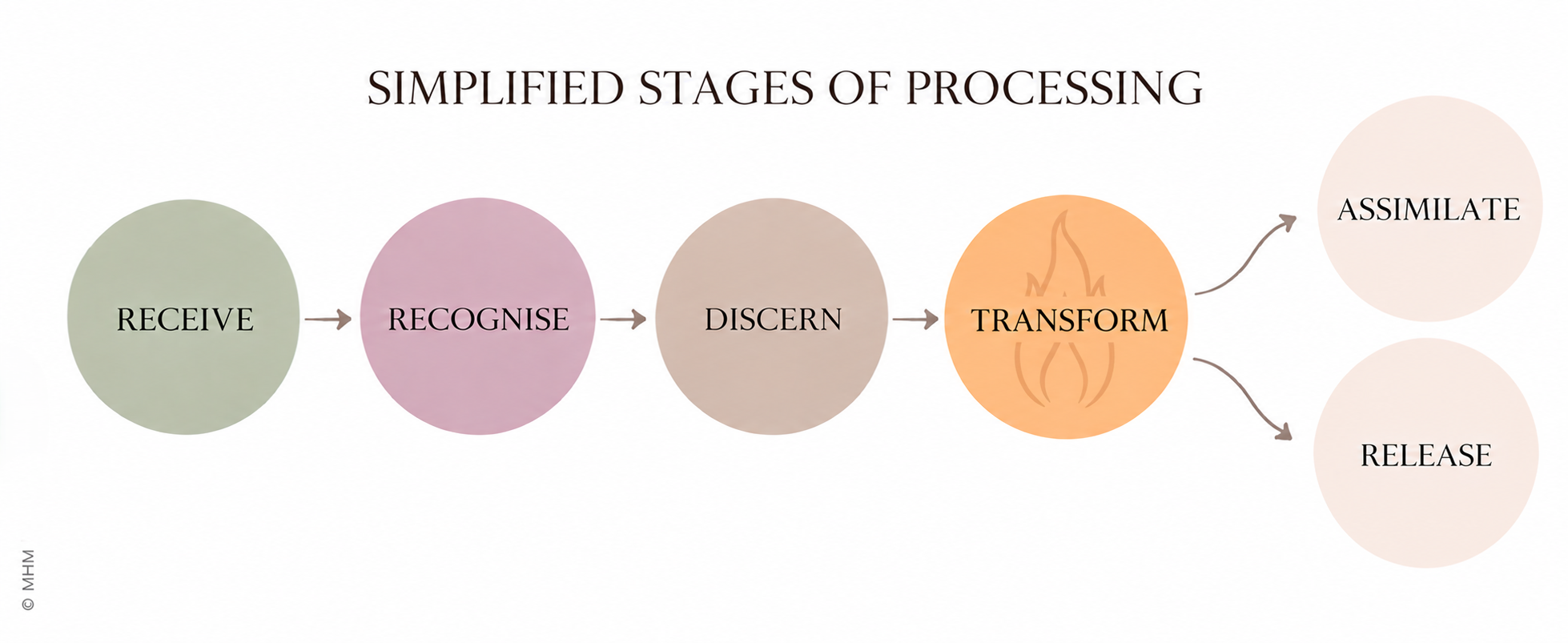
Agni enables us to process and transform what we receive so that what is useful can be assimilated and what is not needed can be released.
RECEIVE → RECOGNISE → DISCERN → TRANSFORM → ASSIMILATE / RELEASE
Reasons to Journal
Each day we receive far more than food. We take in conversations, information, experiences, expectations, memories, thoughts and feelings. All need to be processed.
Journaling supports this process by giving us somewhere to recognise what we have received, discern what it means and transform our experience through writing. What is useful can be assimilated as understanding, insight or learning, while what we no longer need we can let go, accept or release.
Through journaling, our inner experience becomes clearer and easier to observe. We understand ourselves more deeply, uncover meaning and create space for greater clarity, balance and joy.
Ayurveda & The Mind
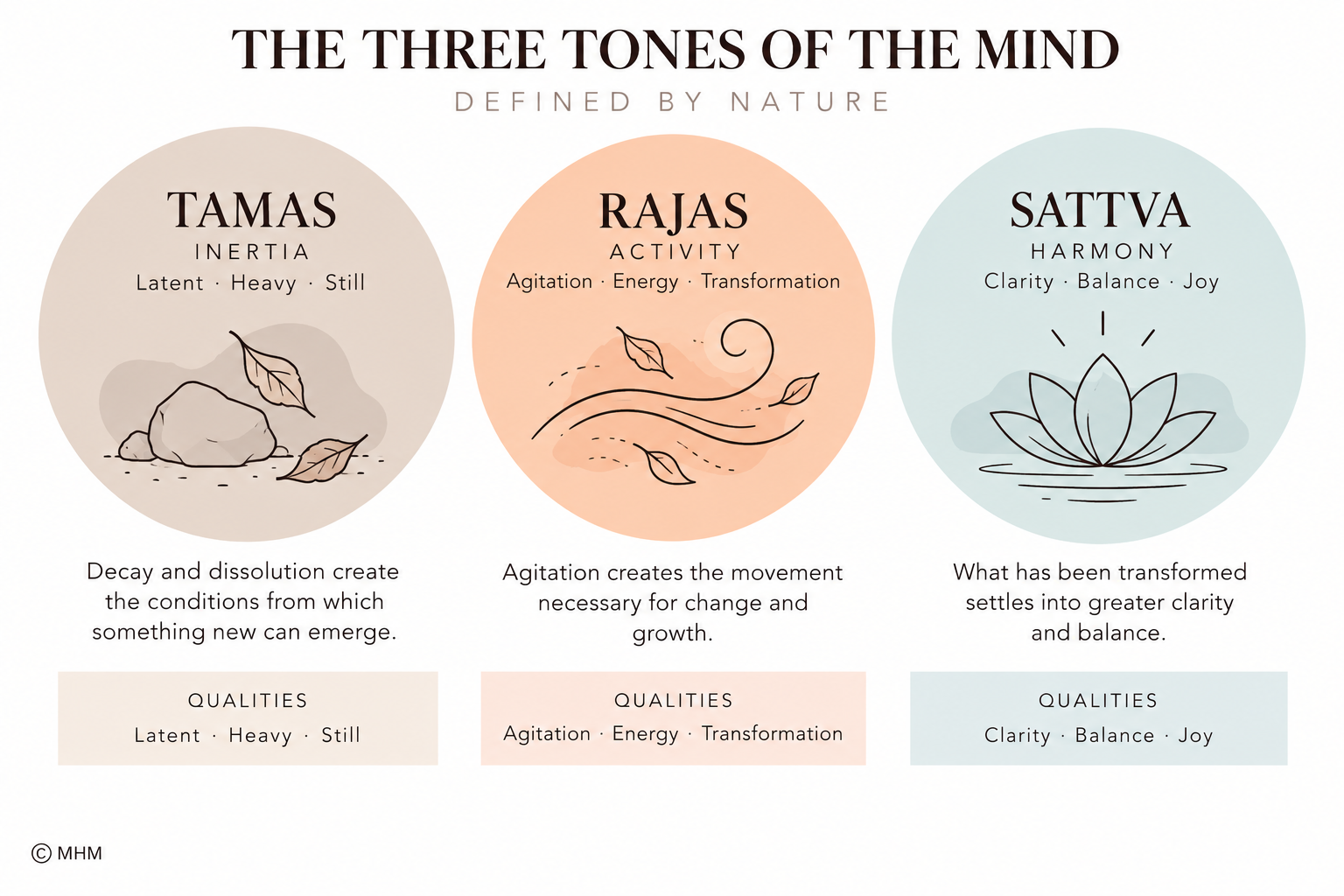
Journaling helps us recognise the tone of the mind and work consciously with what we find. Ayurveda recognises three possible conditions (or tones) of the mind.
In Tamas, thoughts and feelings may feel heavy, stuck or difficult to access. Writing brings them into awareness.
In Rajas, thoughts and feelings are very mobile and active. Darting here and there. Writing helps us express, question and explore, allowing thoughts and feelings to be processed and transformed, and helping the mind settle.
As the mind settles, we move towards Sattva, a lighter and more joyful tone of mind, with greater clarity, balance and joy.
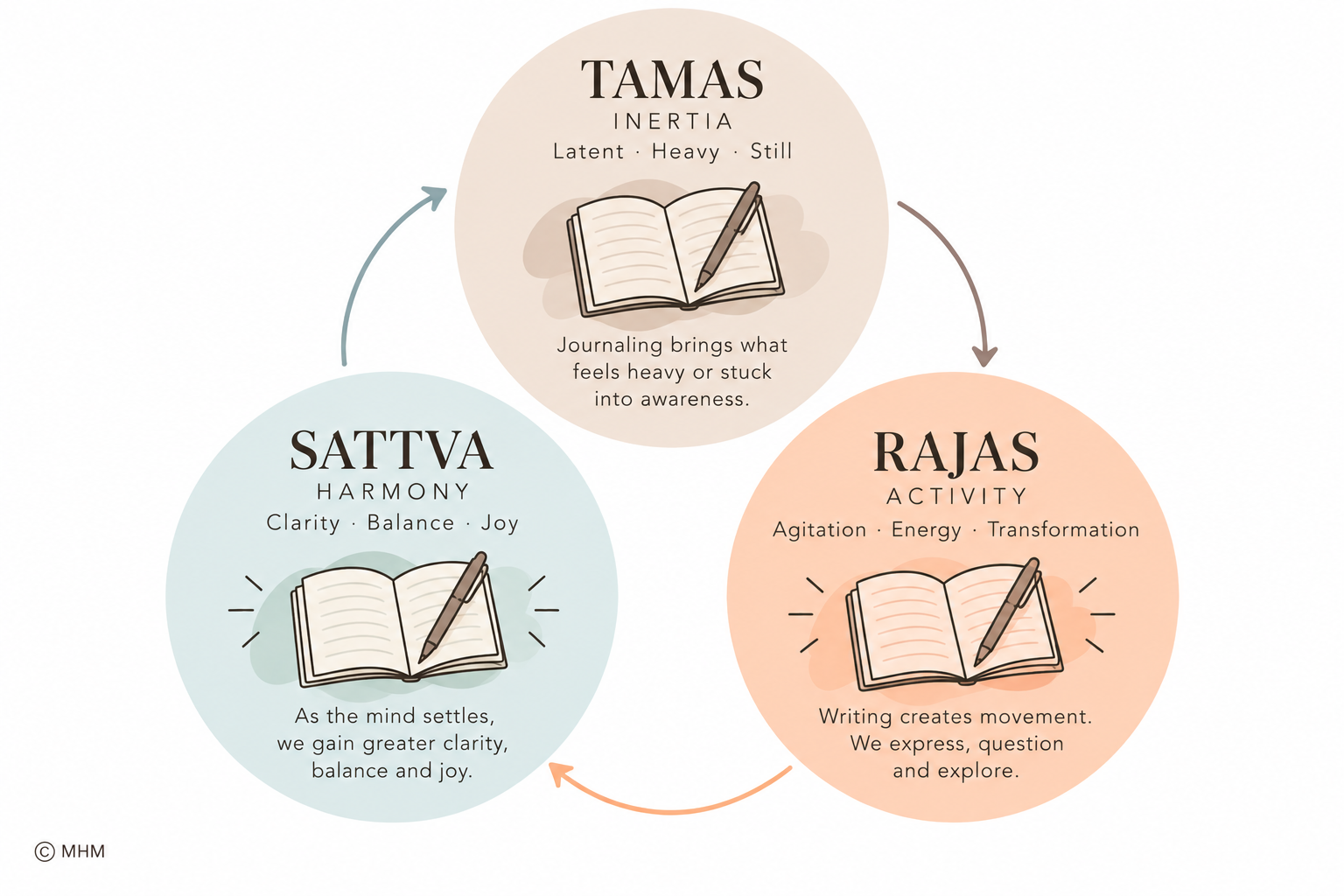
The three tones of the mind are always present. We don't become Tamas, Rajas or Sattva, just as we are not the mind. All three tones coexist, with one becoming more prominent at a particular moment. Our state of mind naturally shifts between them.
We can encourage a more Sattvic state of mind through the way we eat, think and live. By favouring fresh, nourishing foods, positive sensory experiences, reflection, meditation and practices that support lightness, positivity, clarity, balance and joy, such as journaling.
Journaling for Clarity
Every emotion is designed to move through us, not settle and stay. Yet we have become skilled at avoiding discomfort, distracting ourselves from what feels too hard to face. Through journaling, we learn to recognise and understand what we feel. This work invites us to feel, reflect and see ourselves more clearly.
Journaling for Balance
Journaling gives us a place to remain more neutral through life’s ups and downs, allowing us to observe what happens to us through a clearer lens. Rather than being carried away by every thought, feeling or experience, we create space between ourselves and what is happening around us. This work gives us the courage to change.
Journaling for Joy
Journaling invites us to explore a deeper spiritual landscape, one shaped by intuition, awareness and wisdom. By writing down our gratitude and prayers, dreams and aspirations, we consciously turn our attention towards what uplifts us, raising our frequency, expanding our experience of joy. This work deepens and uplifts our experience of life.
The Journaling Experience (Beyond the Mind)
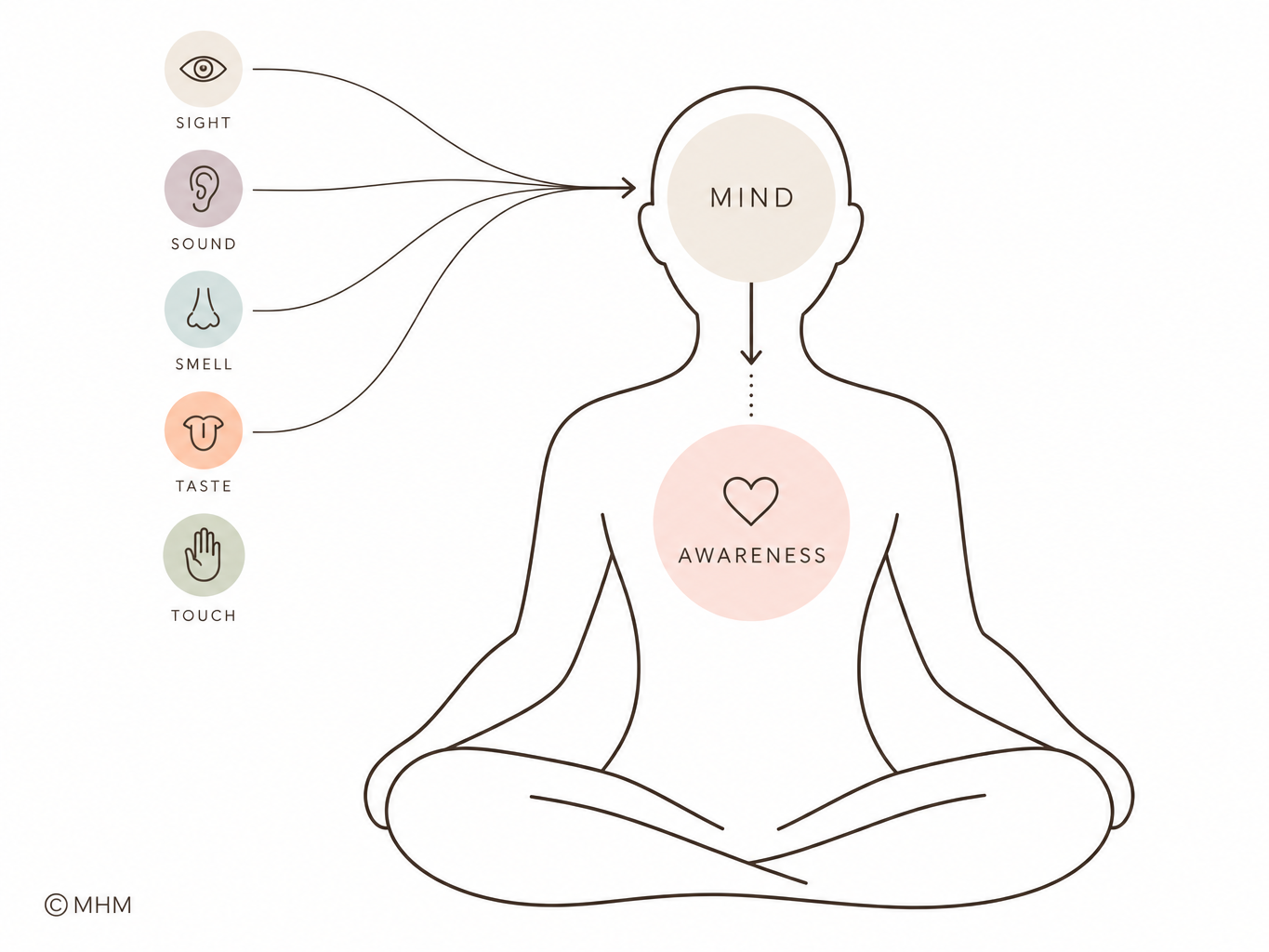
Ayurveda understands the mind as a part of us, but not our deepest self.
Journaling gives us an opportunity to change our point of view in relation to the mind. This is the experience of journaling as shown in my Journaling Wheel.
We can write from within our experience, expressing what we think and feel. Or we can step back from the activity of the mind and observe our thoughts, feelings and responses with greater awareness. As we create this separation, we begin to recognise:
I have thoughts and feelings, but I am also the awareness that can observe them.